

I am Mehran Mozaffari, an applied AI researcher. I study how AI systems behave once they leave the demo and have to survive real workflows, real users, and real failure — and I write up what I find.
Everything on this site is my own point of view. These are field notes from a practitioner, not product announcements and not neutral summaries: I take a position on what is worth adopting, what is worth watching, and what is not worth your afternoon.
What I research
The work spans more ground than "AI" usually implies, because production systems do not respect the boundary between a model and everything around it.
Agentic systems and agent harnesses. Orchestration, tool use, and the harness itself — the layer that decides what an agent can touch, what it must ask about, and how it recovers. Multi-agent arrangements and where they stop paying for themselves. Evaluation that survives contact with real inputs, and the failure modes that only appear under load.
Coding agents and design-as-code. Working directly with coding agents on real repositories; teaching an agent a design language; tokens and design systems at scale; the sandboxed preview-and-export loop that turns an agent's intent into an artifact you can actually ship.
Computer vision, end to end. Not the model alone — the whole chain. Capture, lens and shutter choice, camera placement. Calibration: homography, intrinsics, distortion, and per-frame estimation under broadcast dynamics. Detection and its licensing consequences, multi-object tracking, re-identification, segmentation with foundation models, 2D keypoints through to 3D biomechanics, and spatio-temporal trajectory recovery for objects too small and fast to track naively.
Models, inference and the token economy. Model selection as an operational decision rather than a benchmark argument. Routing, context and cost behaviour, quantisation, and what open-weight models can and cannot displace. Local-first and on-device inference, and the hardware that makes it viable.
Robotics and embodied systems. Low-cost open hardware, the new wave of accessible platforms, and the gap between a controlled demo and a machine that behaves safely in a room with people in it.
Voice and telephony automation. Latency budgets, turn-taking, and interruption handling in interfaces people actually talk to — where a 300ms regression is the difference between a conversation and a hold queue.
Applied AI product direction for domain-heavy businesses, where correctness matters more than fluency, and where the interesting constraint is usually evidence and provenance rather than model capability.
The recurring question behind all of it: under what conditions does this work, and what happens outside them? A capability that holds in a demo and collapses at the edges is not a capability yet.
How I work
Every piece here starts with something I actually studied — a repository I cloned, a tool I ran, a paper I read, a technique I traced through its documentation. Nothing gets written from a summary of a summary.
I write it up when it clears three bars:
- Workflow relevance. It maps to a real operational use case, not a benchmark score.
- Evidence over hype. There is something inspectable behind it — source, documentation, measurable results — rather than a claim.
- Decision clarity. The analysis supports a concrete call: adopt now, watch, or skip.
Each piece is written through the same lens: where the thing fits in a production system, the minimum integration path, the failure modes worth testing first, and what measurable success would look like. Where I am uncertain, I say so; where a limit is real, I name it rather than write around it.
Articles here are living documents. When something meaningful changes, the piece is revised in place rather than duplicated — so what you read is what I currently think, not what I thought when I first published it.
I keep project notes directional. I will share architecture, constraints, and adoption strategy; internal implementation detail and anything sensitive stays out.
My books
I am the author of four living books, written and maintained as the core curriculum of my Agentic Design School.
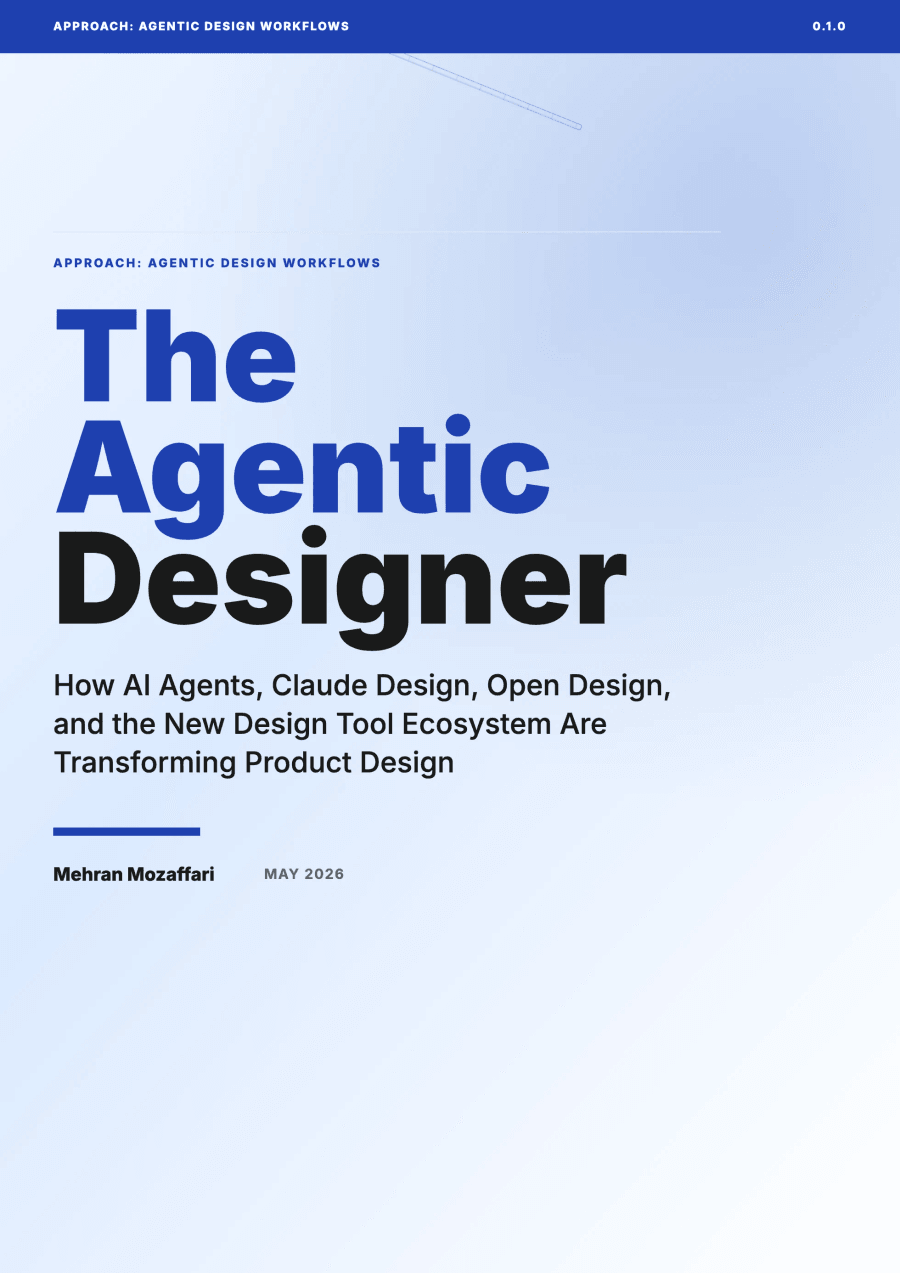
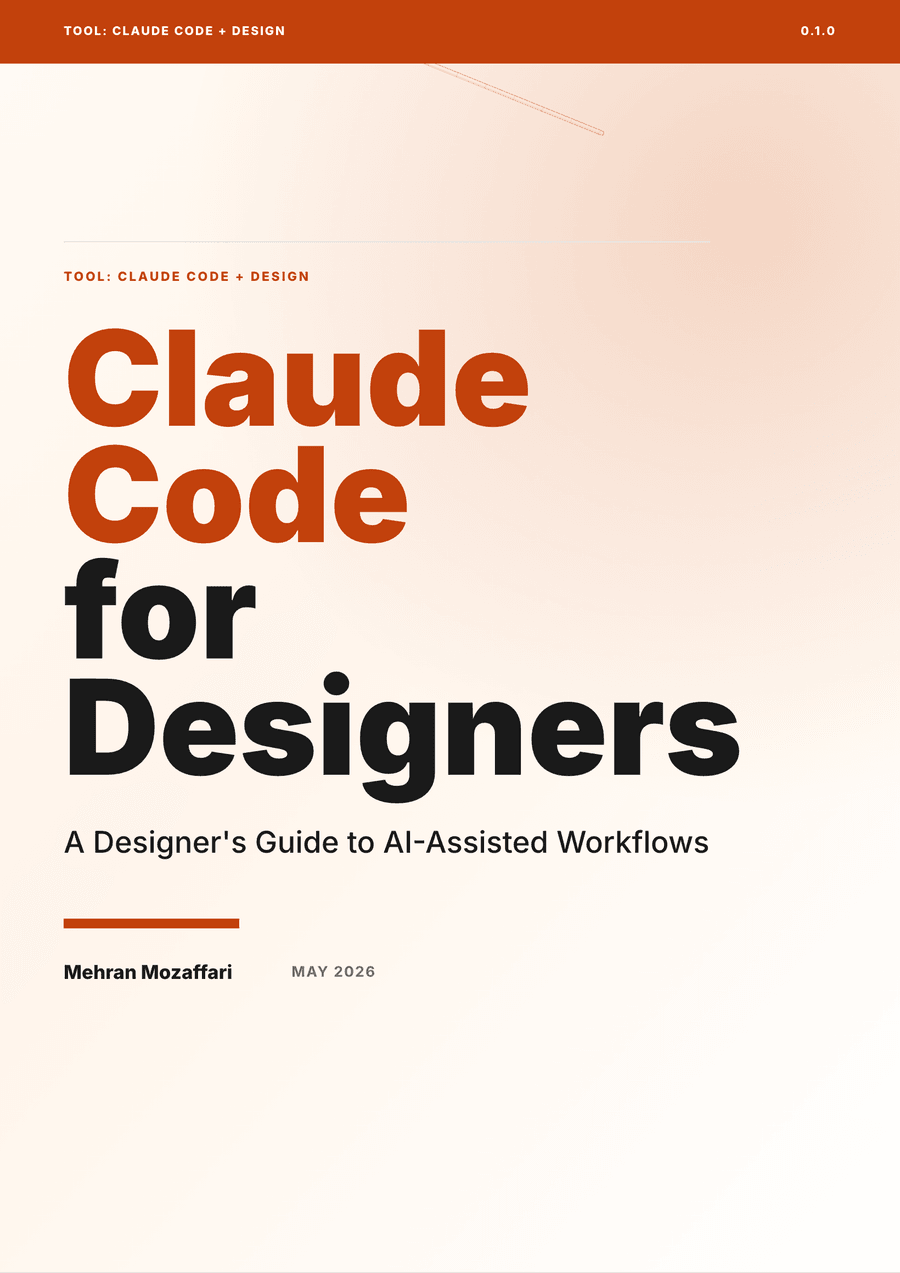
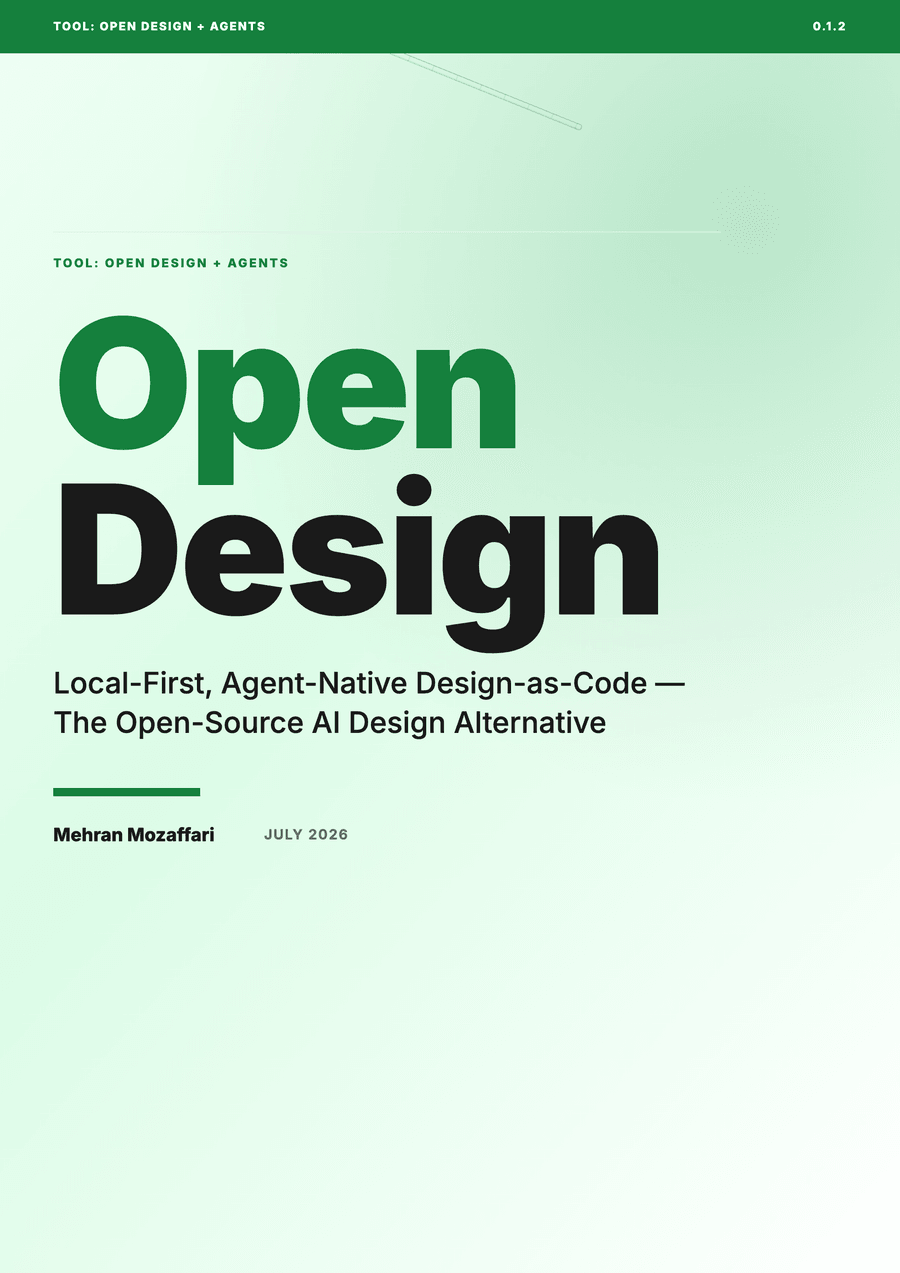

- The Agentic Designer — how AI agents are changing product design, and the operating model that follows for designers, design leads, and builders.
- Claude Code for Designers — working directly with coding agents as a designer, without turning the job into a programming manual.
- Open Design — local-first, agent-native design-as-code, and how to run it without surrendering brand quality or vendor independence.
- Agentic Sport Analytics — the evidence-contract field guide: capture, calibration, detection, tracking, eventing, modelling and the agent harness, measured end to end on pickleball and rugby league.
Each is released like software rather than published like a book — versioned, updated regularly, with release notes, and built in the open on GitHub. Covers, links and release feeds are on the books page.