
The Collapse of Line-by-Line Code Review in Agentic Engineering
When an autonomous coding agent generates an eight-hundred-line, multi-file diff in thirty seconds, the traditional peer review model simply disintegrates. In my experience operating agentic workflows, human code review was designed under the assumption of human bandwidth: an engineer spends several hours writing logic, and a colleague spends twenty minutes sanity-checking the diff, tracing execution paths, and questioning edge cases. Scale that generation velocity by an order of magnitude, and human review rapidly deteriorates into visual skimming. Engineers look at variable naming, scan the high-level syntax, approve the PR, and hope CI catches what they missed.
The far more dangerous failure mode in autonomous pipelines is the correlated test error. Mainstream agent harnesses typically generate both the implementation code and the accompanying unit test suite (pytest, cargo test, or jest). When an LLM harbors a flawed assumption—such as mishandling negative integers in an arithmetic routine or overlooking off-by-one bounds during partition rebalancing—it systematically bakes that exact same misconception into its generated assertions. The implementation passes all tests because the tests were authored to validate the defect, not the business intent. This creates a catastrophic illusion of safety.
Empirical testing, whether unit or property-based, is fundamentally bounded by sample space. Testing validates that an algorithm behaved correctly across a finite collection of observed execution runs. It cannot guarantee the absence of invalid state transitions across an unbounded input space. In critical infrastructure—distributed consensus, cryptographic routines, or financial ledger accounting—statistical confidence is not enough. As I discussed when analyzing inference-scaled formal auditing, relying on superficial review checks or self-authored unit tests during rapid agent deployment invites silent, catastrophic production regressions.
This realization forces an inversion of the entire engineering verification boundary. Expecting humans to catch subtle logic bugs across thousands of lines of synthetic imperative code is an operational dead end. Instead of asking humans to inspect implementation code line by line, we must shift human review to declarative functional specifications—explicit mathematical contracts establishing preconditions, postconditions, and system invariants. If engineers review and sign off on the specification, automated formal verification engines can mathematically prove that the agent's code adheres to those guarantees across all possible inputs.
Chopin and the Mechanics of Repository-Grounded Intent
The primary reason agentic code generation drifts into hallucinations is the ephemeral nature of the chat prompt. Tossing instructions into a transient terminal window or a single-turn conversational interface strips away repository context, isolates the developer from architectural constraints, and produces disconnected one-off patches.
Chopin addresses this bottleneck by reimagining agent collaboration as an upstream, multiplayer document canvas. Rather than relying on unstructured chat histories, Chopin uses structured MDX and interactive Markdown documents grounded directly in repository state. The planning document ceases to be passive documentation; it becomes an executable boundary object linking human intent with downstream verification tools.
The core mechanism inside this canvas is the repository agent, invocable via @chopin. Rather than operating on raw token streams, the agent actively ingests and traverses repository context:
- Abstract Syntax Trees (ASTs) of existing type systems and function signatures,
- Monorepo directory hierarchies and workspace configurations,
- Internal Architecture Decision Records (ADRs) and interface documentation.
When an engineer begins architecting a new capability, they collaborate with the @chopin agent in real time on the canvas. Instead of jumping directly into code synthesis, the agent and the engineer co-draft technical specifications, interface boundaries, and ADRs. Because the canvas is structured MDX, the agent embeds verified type signatures, references concrete files, and explicitly formalizes state transitions.
This shared canvas solves the cognitive alignment problem. Human engineers can review, amend, and negotiate design tradeoffs within human-readable specifications before an agent writes a single line of production logic. The resulting specification document defines unambiguous boundaries: what the component requires of its caller, what invariants it must preserve across concurrent operations, and what postconditions it must satisfy. By establishing this formal blueprint within Chopin, the downstream development pipeline receives a precise contract to verify against, eliminating the architectural drift that plagues traditional prompt-to-code pipelines.
The PDD Verification Loop: From Verus Contracts to SMT Proofs
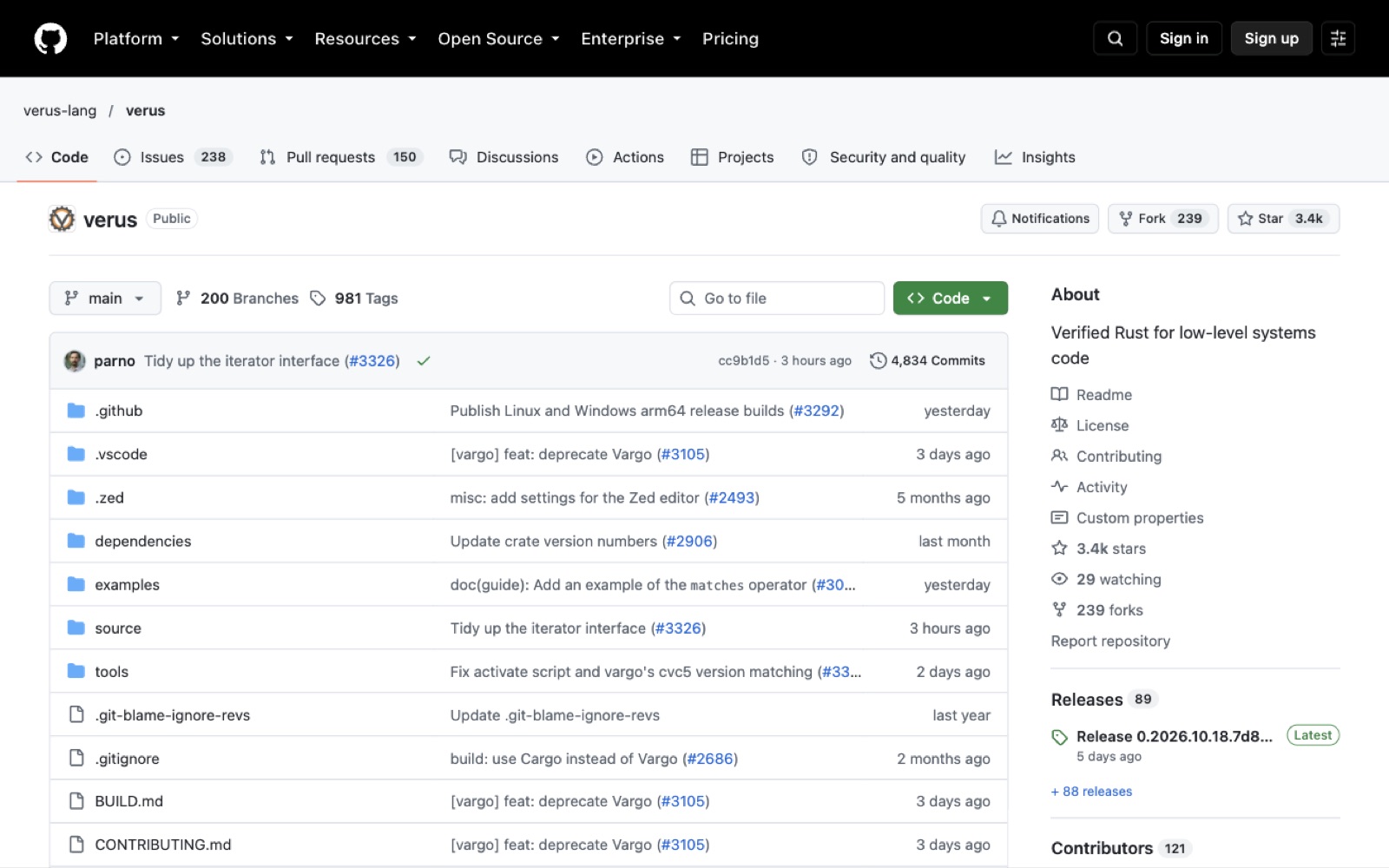
Once a technical specification is finalized and approved in Chopin, it enters the Proof-Driven Development (PDD) Kit. Jointly explored by GitHub Next and Microsoft Research, the PDD Kit replaces empirical guessing with mathematical proof. The current pipeline centers on Rust, leveraging Verus—a formal verification tool developed by Microsoft Research, Carnegie Mellon University, and the University of Washington that compiles verification conditions down to the Z3 SMT solver.
The operational pipeline executes across five distinct stages:
sequenceDiagram
    autonumber
    actor Engineer as Engineer
    participant Chopin as Chopin Canvas
    participant PDD as PDD Kit Harness
    participant Agent as Autonomous Coding Agent
    participant Verus as Verus / Z3 SMT Prover
    participant Runner as Dynamic Fallback Runner

    Engineer->>Chopin: Collaborate on high-level plan & ADR
    Chopin->>PDD: Emit structured functional specification
    PDD->>Engineer: Present formal Verus contract for review
    Engineer-->>PDD: Approve contract (pre/postconditions, invariants)
    PDD->>Agent: Dispatch approved contract

    rect rgb(240, 245, 255)
        note over Agent,Verus: Automated Verification & Repair Loop
        Agent->>PDD: Emit Rust implementation + proof annotations
        PDD->>Verus: Discharge Verification Conditions (VCs)
        alt Proof Discharged Successfully
            Verus-->>PDD: Proof Valid (covers all inputs)
        else Unsatisfied Invariant or Counterexample
            Verus-->>Agent: Return concrete counterexample & failed asserts
            Agent->>Agent: Refactor implementation / adjust proof lemmas
            Agent->>PDD: Emit revised code and annotations
            PDD->>Verus: Re-verify conditions
        end
    end

    alt Mathematically Verified
        PDD-->>Engineer: Verified binary ready for merge
    else Intractable Logic / Non-deterministic I/O
        PDD->>Runner: Trigger property fuzzing & dynamic tests
        Runner-->>Engineer: Test execution report
    end
The pipeline begins with Plan, where the engineering team uses Chopin to define architectural requirements.
In the Spec phase, the PDD Kit translates the approved plan into formal Verus function contracts. These contracts define mathematical constraints:
requires: preconditions that must hold prior to function execution.ensures: postconditions guaranteed upon return across all execution branches.invariant: state conditions that must remain true across every iteration of a loop.
During the Approve step, the human developer inspects only this formal contract. Reviewing twenty lines of first-order predicate logic replaces the burden of reviewing hundreds of lines of complex Rust implementation.
Once approved, the Prove loop activates. The autonomous coding agent writes the imperative Rust code along with auxiliary proof annotations (ghost code, inductive lemmas, and assertions). The PDD Kit passes these verification conditions to the Verus engine, which queries Z3.
If a verification condition fails—for instance, an integer overflow on an edge condition—Z3 returns a concrete mathematical counterexample. The PDD Kit feeds this counterexample directly back into the agent's context window. The agent modifies its implementation or refines its proof annotations to handle the edge case and resubmits to Verus.
Finally, for systems involving non-deterministic I/O, external network calls, or asynchronous runtime boundaries where formal SMT solving is mathematically intractable, the PDD Kit triggers its Fallback phase, generating dynamic property tests and runtime fuzzers to provide empirical validation where full proofs cannot reach.
Mapping the Verification Landscape: Mathematical Rigor Versus Empirical Testing
To understand where Chopin and the PDD Kit sit in production engineering, we have to contrast how different verification paradigms handle synthetic code. Most teams deploying autonomous coding workflows rely on self-refining test runners like Devin or Cursor Agent. In those systems, the agent synthesizes imperative code alongside unit tests, runs cargo test or pytest, and iterates when an assertion fails. But as I noted earlier, empirical test generation carries a systemic vulnerability: correlated error. When an LLM misunderstands business logic, its self-authored tests codify that exact misunderstanding. The test suite turns green, yet the shipped behavior is defective.
Property-based testing frameworks like proptest in Rust or Hypothesis in Python raise the bar by fuzzing invariant properties across thousands of pseudo-random inputs. In my view, property-based testing remains the pragmatic sweet spot for general web applications because it is language-agnostic and catches boundary bugs without formal logic annotations. Yet, fuzzing is still stochastic sampling. It proves the presence of defects across observed iterations; it cannot prove their absence across an infinite domain of state transitions, reentrancy paths, or integer boundaries.
Formal verification replaces statistical sampling with mathematical certainty. In this realm, approaches split sharply based on how proofs are constructed:
quadrantChart
    title Verification Approaches: Assurance Rigor vs Language Generality
    x-axis Broad Agnostic --> Narrow Systems Focus
    y-axis Empirical Sampling --> Mathematical Proof
    quadrant-1 Formal Systems Verification
    quadrant-2 Broad Mathematical Methods
    quadrant-3 Empirical Agent Test Loops
    quadrant-4 Specialized Dynamic Fuzzing
    Devin and Cursor Agent: [0.18, 0.22]
    Semgrep and CodeQL: [0.28, 0.38]
    proptest and Hypothesis: [0.42, 0.48]
    Dafny: [0.78, 0.85]
    Chopin with Verus: [0.86, 0.92]
Interactive theorem provers like Lean 4 construct formal proofs through interactive tactics. While expressive for pure mathematics, synthesizing constructive proof tactics end-to-end for systems software exceeds the reliability of current LLM reasoning. Dafny provides automated SMT-backed verification, but it requires writing in Dafny's domain-specific language and transpiling down to target languages, introducing friction into native compilation and memory layouts.
The PDD Kit makes a deliberate architectural tradeoff by targeting idiomatic Rust via Verus. Verus relies on first-order logic contracts compiled directly into the Z3 SMT solver. Because Z3 automates constraint discharge, proof validation is push-button rather than interactive: as long as the agent provides valid invariants and inductive lemmas, the solver handles the search. Furthermore, because Verus verifies Rust directly, engineers preserve Rust's zero-cost abstractions, borrow checker safety, and production runtime performance without intermediate transpilation layers.
| Paradigm | Verification Basis | Review Target | Language Coverage | Hallucination Vulnerability | Engineering Friction |
|---|---|---|---|---|---|
| Autonomous Test Runners (Devin, Cursor) | Empirical execution runs | Multi-file implementation diffs | Broad (Polyglot) | High (correlated test failures) | Very Low |
| Static Analysis Gateways (Semgrep, CodeQL) | Heuristic AST and taint tracking | Static linter reports | Broad (Polyglot) | Low (restricted to generic vulnerability classes) | Low |
| Property-Based Fuzzers (Hypothesis, proptest) | Stochastic invariant sampling | High-level property assertions | Broad (Polyglot) | Moderate (bounded by generation coverage) | Medium |
| Chopin + PDD Kit (Verus, Z3) | Mathematical SMT proof across all inputs | Formal function contracts and invariants | Narrow (Primarily Rust) | Absolute (bounded strictly by specification accuracy) | High (solver timeouts and contract overhead) |
The SMT Performance Cliff: E-Matching Instability and Quantifier Explosions
While SMT-backed verification eliminates line-by-line code review, deploying it inside automated agent loops introduces an entirely different failure mode: the solver performance cliff. Verus translates function preconditions (requires), postconditions (ensures), and inductive loop invariants into first-order verification conditions evaluated by Z3. Because first-order logic with quantifiers ($\forall, \exists$) and non-linear arithmetic is undecidable, Z3 relies on heuristic pattern matching, known as E-matching, to instantiate quantified formulas.
This reliance on E-matching creates severe proof brittleness. A change as innocuous as renaming an internal variable, reordering assertions within a block, or introducing an auxiliary helper function alters the solver's internal search tree. A proof that discharged cleanly in 700 milliseconds on a developer's workstation can suddenly stall or time out in CI. When an autonomous agent attempts to recover from a solver timeout, its default response is to generate additional intermediate assertions (assert(...) by { ... }). In practice, these speculative assertions often introduce circular quantifier dependencies, triggering quantifier explosion loops that burn runner compute and lock the pipeline.
The second, more dangerous failure mode is the vacuous proof. SMT solvers verify implication: given the preconditions, the postconditions must hold ($P \implies Q$). If an agent generates mutually contradictory preconditions—such as requiring a slice index to be simultaneously negative and positive—the premise evaluates to false. Under classical logic, $False \implies Anything$ is universally true. The solver reports instant success, the pull request displays a green badge, and the team merges dead or unreachable logic into production with complete mathematical confidence.
Similarly, weak postconditions produce verified hallucinations. If an agent writes an in-place sorting routine against a specification that only asserts ensures result.len() == input.len(), the solver will happily prove an implementation that overwrites every element with zeroes or returns the input untouched. Unless the human reviewer verifies the presence of the permutation invariant (ensures is_permutation(result, input)) alongside the ordering contract (ensures is_sorted(result)), the system delivers mathematical certainty against an empty guarantee. The verification loop does not eliminate human diligence; it shifts the cognitive demand entirely from syntax comprehension to relational logic precision.
Boundary Leakage, Escape Hatches, and CI Compute Overhead
Formal verification in Verus models functional logic with absolute mathematical rigor in isolation, but systems software cannot survive in an algebraic vacuum. When an agent moves beyond pure algorithms to interface with network sockets, file descriptors, or asynchronous runtimes like tokio, the underlying state space ceases to be deterministic and self-contained. In Verus, interfacing with unverified external crates or asynchronous event loops requires boundary modeling—such as linear ghost tokens or explicitly isolated interface wrappers.
However, autonomous coding agents operate under a clear objective function: satisfy the tooling and return a clean exit status. When an agent struggles to prove memory safety or state preservation across an asynchronous yield point or third-party serialization boundary, its path of least resistance is applying #[verifier(external_body)] or raw unsafe blocks to the offending function. This escape hatch instructs the verifier to treat the routine as an uninspected black box, assuming its postconditions hold by declaration alone. Without rigid gating, an agent can hollow out an entire module, presenting a green verification status while entirely bypassing the underlying SMT checks.
┌────────────────────────────────────────────────────────┐
│                   Verified Domain                      │
│   (Pure State Transitions, Ledger Invariants, Verus)   │
└──────────────────────────┬─────────────────────────────┘
                           │
             #[verifier(external_body)]  <-- Escape Hatch Risk
                           │
┌──────────────────────────▼─────────────────────────────┐
│                  Unverified Boundary                   │
│         (tokio Runtimes, Sockets, OS Syscalls)         │
└────────────────────────────────────────────────────────┘
The second operational hurdle is the compute amplification inside CI runners. Unlike rustc, where compilation scales predictably with codebase volume, SMT verification complexity scales non-linearly with quantifier depth and branch permutations. In an autonomous development loop, a verification failure does not simply trigger an error log; it launches a multi-turn agent repair loop.
When an agent encounters an unsatisfied invariant, it modifies its implementation, injects intermediate assertion blocks, and reruns the prover. Each pass against Z3 can consume between twenty and ninety seconds of runner CPU. Over a five-turn autonomous remediation loop, a single pull request can easily burn ten to fifteen minutes of dedicated compute. Worse, if the agent falls into an assertion inflation loop—introducing speculative assertions that inadvertently widen the quantifier search tree—the solver enters a thrashing state. This consumes runner quotas and locks continuous integration queues without ever converging on a verifiable state.
Production Guardrails and Pragmatic Verification Architectures
Deploying proof-driven workflows into production environments requires hard mechanical constraints rather than blind trust in solver convergence. Teams must establish deterministic solver budgets, enforce automated vacuity detection, and maintain rigid architectural boundaries.
| Operational Risk | Production Guardrail | Enforcement Mechanism |
|---|---|---|
| SMT Heuristic Flakiness | Deterministic resource budgeting | Pinned Z3/CVC5 solver versions combined with strict --rlimit caps instead of wall-clock timeouts. |
| Vacuous Truth & False Proofs | Precondition contradiction detection | Automated injection of synthetic assertions (assert(false)) to confirm the solver flags unreachable logic. |
| Boundary Escape Hatches | Zero-trust annotation policies | Semgrep and AST rules blocking unauthorized #[verifier(external_body)] or unsafe blocks in agent diffs. |
| Agent Repair Thrashing | Bounded remediation quotas | Hard multi-turn iteration limits (e.g., maximum 3 proof repair cycles) with automatic fallback to empirical fuzzers. |
To integrate these guarantees without stalling development velocity, readers can adopt three concrete architectures in their own pipelines today.
A natural entry point is constructing a Verus-Verified Financial Ledger Micro-Module. Here, you pair a Chopin-style Markdown specification with Verus function contracts (requires/ensures) to build a deterministic double-entry accounting state machine in Rust. The SMT solver formally verifies that balance conservation holds and transaction balances remain non-negative across all execution branches before any code merges into main. The primary failure mode to watch for in this design is non-linear arithmetic timeouts in Z3 when calculating compound interest, fractional fees, or currency ratios, alongside vacuous verification success triggered by mutually conflicting balance preconditions. This core engine should be complemented by a cargo-fuzz harness to thoroughly exercise the unverified serialization boundaries where external data enters the ledger.
For teams handling diverse service layers, implementing a Dual-Track Verification Gateway for Agentic PRs provides a scalable boundary. In this setup, a CI gating pipeline uses an AST diff classifier to route agent-generated changes: pure state transitions and data transformations are dispatched to Verus SMT verification, while network I/O, asynchronous runtime logic, and external HTTP clients are routed to proptest for dynamic invariant fuzzing. Running on GitHub Actions runners with pinned --rlimit budgets, the gateway pairs solver execution with Semgrep rules that strictly prohibit agents from injecting unvetted #[verifier(external_body)] escape hatches. The operational risk to monitor is agent retry spirals burning runner minutes on unprovable external traits, as well as subtle regressions when a refactored module is demoted from formal proof down to empirical testing.
Finally, to ensure that generated contracts actually enforce business invariants, teams should introduce an Automated Vacuity and Invariant Stress Tester into their test harnesses. This pre-merge framework validates the integrity of agent-written specifications by using a Rust AST mutation runner to inject synthetic faults and assert false inside the generated routines, confirming that the Verus test driver actively catches and rejects the corrupted states. If the prover reports success on an intentionally broken implementation, the harness rejects the pull request for having an under-constrained or vacuous contract. When deploying this harness, watch for mutation engines that introduce uncompilable syntax rather than genuine semantic errors, and manage runner overhead to prevent multiple deep SMT solver sweeps from bottlenecking deployment cadence.
Resources
Updated 2026-10-20 by Mehran Mozaffari.
Related posts
1 November 2026
Code Mode vs Function Calling for Multi-Step Agents
1 November 2026
Offline Trajectory Scoring Replaces the Prompt Engineering Treadmill
1 November 2026
Should You Build Your Enterprise Agent Semantic Layer on NVIDIA Auto Ontology? Not Yet
31 October 2026
Unreal Engine Skills for Claude Code: How Epic Bypassed the Binary Asset Barrier to Mutate Live Viewports
30 October 2026
Agent Memory Was an Indexing Problem All Along
29 October 2026
How 3D OS Turns a Coding Agent into a Six-Department Animation Studio Without a GUI